

What Is Thought Leadership? (And Why Most People Get It Wrong in 2026)
Learn what thought leadership really means, how it differs from personal branding, and why genuine expertise matters more than ever in the age of AI.
THOUGHT LEADERSHIPPERSONAL BRANDING
Saomai Le
7/24/202610 min read
TL;DR:
Thought leadership was coined to describe people whose ideas were so grounded in real experience that they were actively changing how industries operated.
Today the term is handed to anyone with a posting schedule, and most senior decision-makers say the content they read under that label gives them no genuine insight.
AI has made it impossible to tell real expertise from manufactured credibility, which is exactly why genuine thinking has never mattered more.
Sharing what you genuinely know is not self-promotion. It is a responsibility to the people who need it and the fields that deserve better.
Table of Contents:
Thought leadership was redefined by a personal branding industry that turned it into a content strategy. What was once reserved for people who genuinely moved their fields forward is now handed to anyone with a posting schedule.
Here is what it actually means and why that distinction matters.
[

What Is Thought Leadership, Really?
The term “thought leadership” was coined in 1994 by Joel Kurtzman, founding editor of Strategy+Business magazine. He was not describing people with large followings or polished profiles. He was describing thinkers whose ideas were so grounded in real experience, and so original in their conclusions, that they were actively changing how industries operated and thought.
Peter Drucker was the standard he had in mind.
Drucker was the first to argue that managing people required fundamentally different thinking from managing machines. In the 1940s and 1950s, when top-down command-and-control was the unquestioned standard, he spent years inside organisations observing how they actually functioned and became convinced the model was wrong. He introduced concepts like decentralised leadership and knowledge work that the business world resisted at first but then adopted across their organisations.
His ideas did not spread because he was trying to build a personal brand. They spread because the results of his thinking showed in the success of the organisations that applied them. The executives who encountered his work found they could not lead the same way afterwards, and he kept proving his conclusions until they became the foundation of business management.
That standard still exists. It is just harder to see beneath the volume of content produced by people who adopted the label without meeting the condition.
01. The Original Definition
Thought leadership means publicly sharing a genuine point of view rooted in real expertise, in a way that earns trust, shapes conversations, and influences how people think and act within your industry.
[
Key Takeaways:
Kurtzman defined thought leadership by the depth and originality of the thinking, not by the size of the platform.
Drucker's ideas spread because the organisations that applied them produced results visible enough that others wanted to know who was behind them.
The definition has always required real expertise, a genuine point of view, and the conviction to share it with the world.
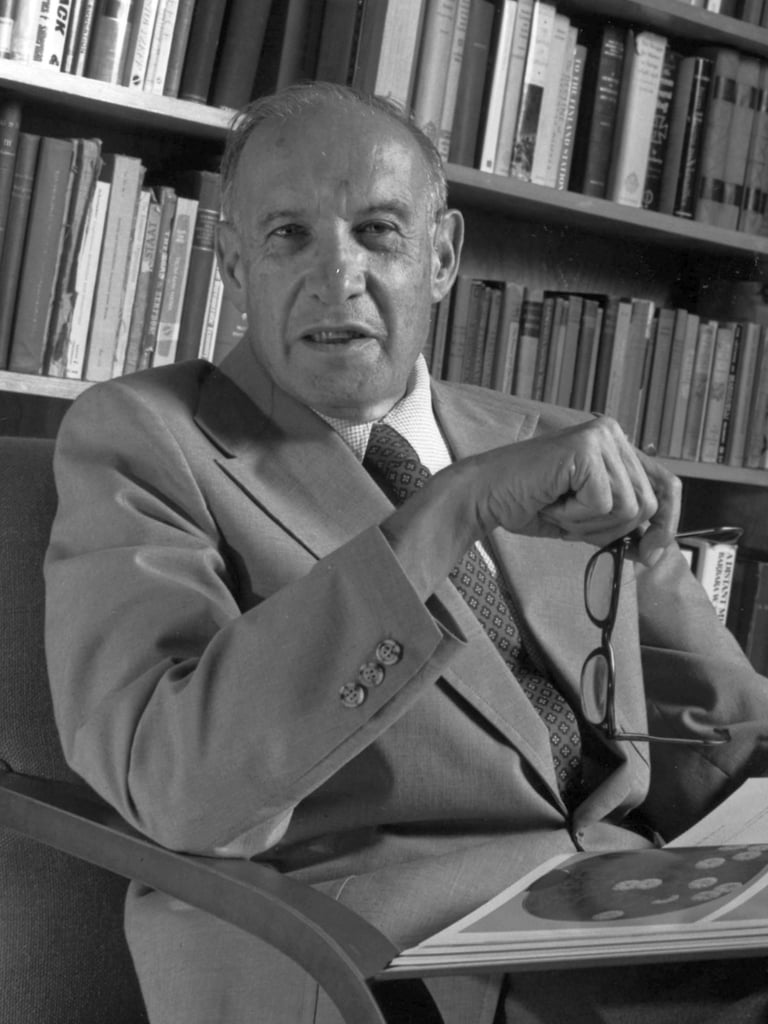
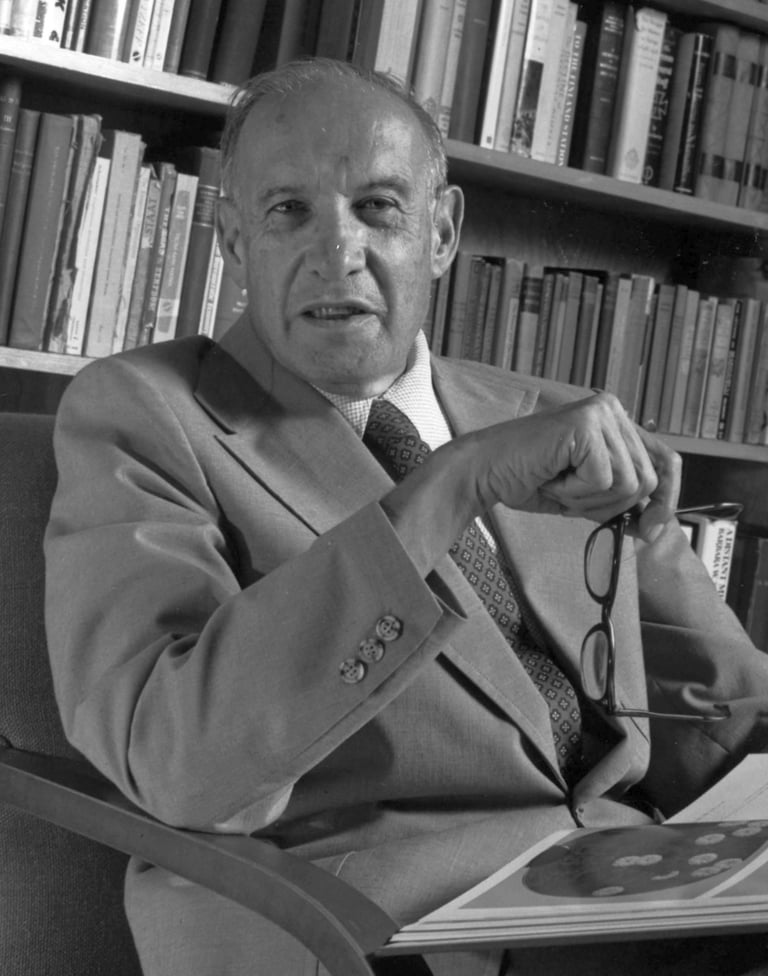
Photo: Peter F. Drucker, © Jeff McNeill, licensed under CC BY-SA 2.0, via Wikimedia Commons.
Why Is Most "Thought Leadership" Content Bad in 2026?
Somewhere between Kurtzman's original definition and today, the term got watered down by an industry that turned it into a platform strategy. Post consistently, optimise your profile, stay visible long enough and the label will follow. Thought leadership has always been built on the quality of the thinking behind it, whether that thinking reaches people through a book, a boardroom, or a LinkedIn post.
That sounds obvious written down. But it stops being obvious the moment good thinking has to compete against a never-ending feed of content.
Drucker reached people through university classrooms, boardroom consultations, 39 books, and a monthly Wall Street Journal column. Social media changed that entirely.
02. The Problem
Recent annual Edelman-LinkedIn B2B Thought Leadership Impact Reports make two things clear: the quality problem, and the price of getting it wrong.
The people who pay the price are the actual thought leaders. The researchers, executives, and practitioners who spent careers building real expertise, only to find it sitting in the same category as a polished LinkedIn profile.
[
Consistency over substance
Engagement over depth
Visibility over value
Key Takeaways:
When social media gave everyone a publishing platform, the standard of what counted as thought leadership did not come with it.
LinkedIn rewards content that performs, not content that matters, and the algorithm cannot tell the difference.
Poor thought leadership is not just ineffective. It actively damages the reputation of the people and organisations behind it.
The rise of the personal branding industry accelerated this further. LinkedIn was originally built for business professionals, but gradually became a content platform, and the shift changed what got rewarded.
Most algorithms are built around behavioural signals: how long someone reads, how often they comment, how consistently an account posts. Platforms have added more sophisticated quality checks over time, but these tend to work as patterns rather than judgement. They learn what performs well but do not assess whether an idea is actually original. In practice, a well-structured post with a strong hook often outperforms a genuinely original idea explained less smoothly, not because any platform sets out to reward the wrong thing, but because a polished piece of content simply tends to generate behavioural signals faster.
In practice, that tends to favour:
[
For the first time, experts could publish their thinking directly, without going through publishers or institutions. But the same access was available to everyone, and the standard of thought leadership did not come with it.
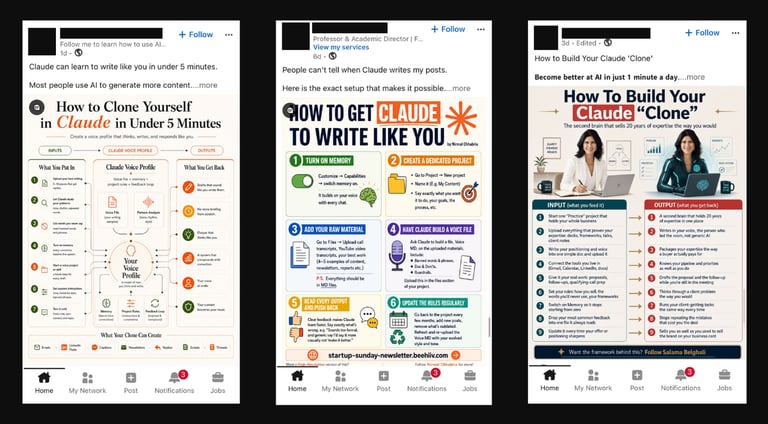
Examples of unoriginal content which gets copy-pasted by multiple personal brands.
What Is The Difference Between Thought Leadership and Personal Branding?
Personal branding and thought leadership are not the same thing. Most people treat them as interchangeable, and that is where the confusion starts.
03. The Distinction
Most people with genuine expertise hold back from sharing their knowledge publicly because they do not want to be associated with the performative culture they see on social media. But thought leadership was never about self-promotion or personal branding. It is about the responsibility to make sure the right thinking reaches the people who need it.
A personal brand is an image you build.
Thought leadership is what changes after people encounter your work. That difference is where trust and authority are built.
[
Key Takeaways:
Personal branding optimises for attention. Thought leadership is built around having something worth paying attention to.
Personal branding is measured in reach. Thought leadership is measured in whether people think differently because of what you shared.
Most experts who resist sharing publicly are not resisting thought leadership. They are resisting personal branding culture, and the confusion between the two is what keeps the right voices out of the conversation.
Personal branding asks:
How do I reach more people?
How do I appear credible to the people I want to attract?
How do I create enough visibility that people buy from me?
Thought leadership asks:
What do I genuinely believe, based on real experience, that my field needs to hear?
Am I saying something that can change how people think, decide, and act?
Am I building a body of work that will still matter in ten years?
Personal branding is measured in impressions, likes, follower growth, and reach.
Thought leadership is measured in something harder to count: how many people start thinking differently because of what you said, and how many come to you because they believe in what you stand for rather than because a well-placed hook caught their attention.
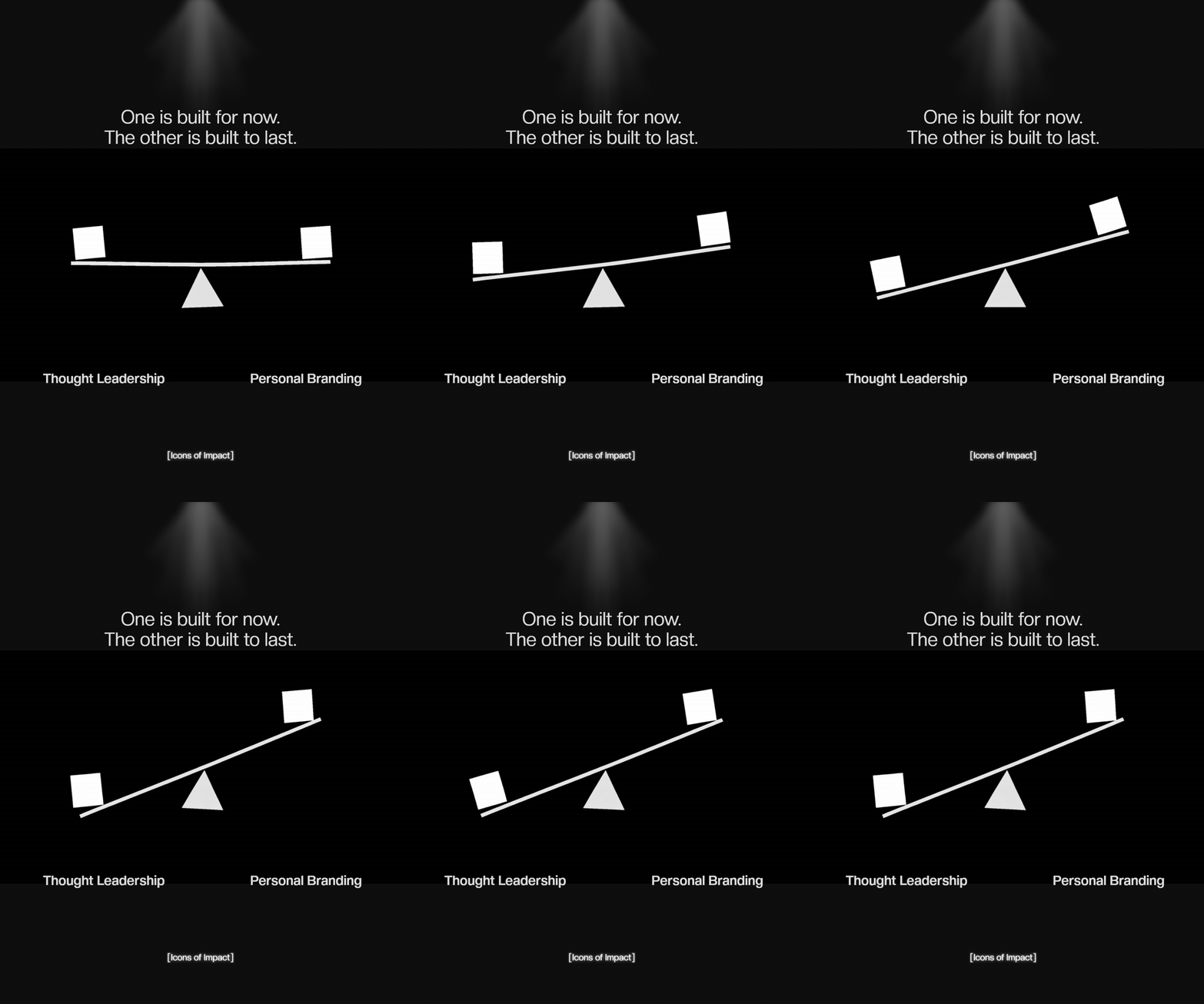
Thought Leadership vs Personal Branding Scale
Why Does Thought Leadership Matter in the Age of AI?
The people who have spent years building genuine expertise hold something no AI tool can replicate. AI has a legitimate place in how we work, but replacing genuine thinking is not one of them. The ideas, the conclusions, and the conviction behind them still have to come from someone who has done the work. Bringing that thinking into the public conversation is how industries stay grounded in something real.
04. The Urgency
62% of consumers say trust is a key factor in choosing to engage with a brand, and over half now question the content they see online more than before.
[
Key Takeaways:
Over 50% of workers now present AI-generated content as their own, which means the professional world can no longer tell real thinking from manufactured content.
Trust is rising as a priority precisely because it has become harder to find. 62% of consumers say it is now a key factor in who they choose to engage with.
The people with genuine expertise hold something AI cannot replicate. Sharing it is a responsibility to the fields and people that need it most.
AI draws from:
What is already made public
Articles, blogs, and published research
Open datasets and indexed sources
The same information everyone else can access
Thought Leadership draws from:
What only experience teaches
Decisions made under real pressure
Conclusions formed through years of work
Situations no model has ever been inside
Thought leadership matters more in the age of AI because trust has become the scarcest resource in professional life. AI has made generic content infinite, but it cannot replicate thinking formed through real experience. What used to be a soft signal of expertise is now the only signal people can genuinely rely on.
Artificial intelligence has made generic content infinite for anyone to produce. Even many social media gurus are selling AI as the shortcut to building authority: use it to write your posts, duplicate your voice at scale, stay visible and you will be seen as a thought leader. According to a 2025 KPMG global study, over half of workers already admit to presenting AI-generated content as their own. Real expertise and manufactured credibility have never been harder to distinguish.
Which is exactly why genuine thinking and trust building has never mattered more.
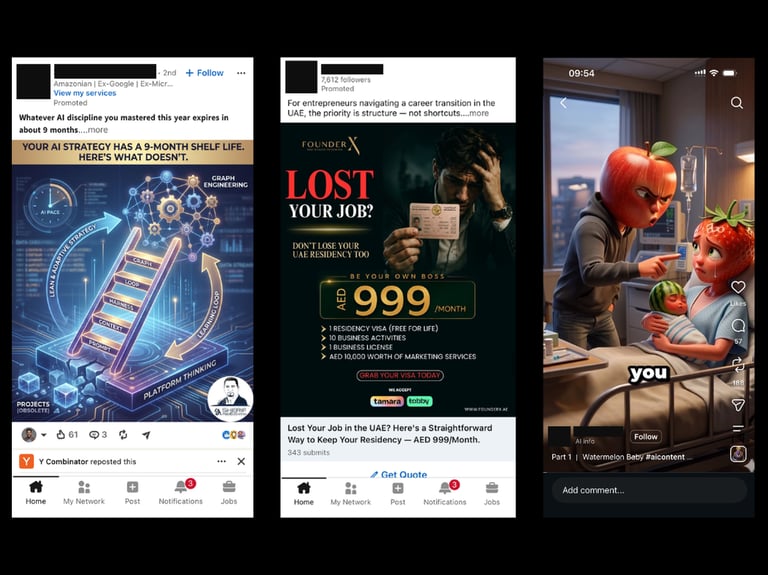
Examples of AI slop content on different social media platforms.
What Does Real Thought Leadership Look Like?
Most people who decide to build a public reputation start with the wrong question. Which platform, which format, how often to post. Genuine thought leadership begins with the real experience and depth of understanding that gives someone the right to speak about their field with genuine authority.
Here is what that actually looks like:
05. The Standard
Key Takeaways:
Genuine thought leadership begins with depth of experience and a real point of view, not with a platform.
Building trust by giving value before asking for anything is what separates a lasting reputation from a temporary presence.
Real public authority takes months and years to build, which is exactly what makes it worth building.
01
It changes how people think
There is a difference between content that adds to what someone knows and content that changes how they see what they already knew. The first informs but the second leaves a mark.
02
It starts with a point of view
A thought leader is not someone who posts whatever keeps them visible. They are someone with a specific position and point of view on their field, and the conviction to stand behind it.
03
It builds trust before it asks for anything
Real public authority is built by giving before getting, without expecting anything in return. That orientation is what produces a reputation that outlasts any single post or campaign.
04
It is built on real experience
A reputation built on genuine thought leadership comes from real work, a perspective formed through actual experience, and the commitment to share it with the people who need it most.
05
It is built slowly
Lasting public authority takes months and years to build. It comes from real work, a track record that speaks for itself, and thinking that stays consistent over time.
Who Should Be Building Thought Leadership? (And Who Should Not)
06. The Real Thought Leaders
When the people who actually have something to say stay silent, the conversation does not stop. It continues, led by whoever was willing to show up.
[
Key Takeaways:
The people with the most to contribute to their fields are rarely the ones leading the public conversation. They are too busy doing the actual work, or too discouraged by the performative culture of personal branding.
Thought leadership built on performance rather than conviction erodes authority over time rather than building it.
The conversations shaping every industry continue with or without the most qualified voices. Whether the right people are part of them is a choice.
Thought leadership should be built by people who lead with purpose over vanity and have done the work to back it up. This includes five specific groups:
It is built slowly
Impact Founders
Founders building businesses driven by conviction, not just financial profit. They have real experience in their field and a clear point of view on what needs to change. Building a public presence around that accelerates trust with investors, attracts aligned customers, and turns a business mission into something people want to be part of.
Experienced Executives
Leaders with years of experience who have shaped organisations and industries. They have extensive expertise but the world has not heard from them yet. Building a public reputation opens doors that a CV alone cannot, from board seats and advisory roles to speaking platforms. And for those considering building something of their own, it is the foundation that makes that transition possible.
Impact Investors
Investors channelling capital into businesses that create real impact alongside financial return. A clearly articulated investment thesis, shared publicly, attracts better aligned founders, builds credibility in the ecosystem, and positions them as a shaping force in the industries they back.
Purpose-Driven Organisations
Organisations whose work is rooted in a clear mission beyond commercial growth. Sharing that mission and the thinking behind it builds institutional credibility, attracts aligned partners and talent, and reaches the people who need to find them.
Researchers, Academics and Experts
Professors, doctors, lawyers, engineers, and consultants with deep specialist knowledge that rarely reaches the people who need it most. Building a public presence around their work brings it out of institutions and into the conversations where it can create real change.
The standard of thought leadership Kurtzman described in 1994 has not changed. There are more people who meet it today than ever before. But most of them are simply too busy with their work to think about sharing it publicly. Others see posting on social media as self-promotion and want nothing to do with it.
What both groups are missing is the same realisation: sharing genuine expertise is not a personal branding decision. It is a responsibility to the field and to the people in it who deserve better than what the current conversation is offering them.










What people ask us most often.
FAQ about Thought Leadership

